
Trading in the Modern World: Understanding Markets, Strategies, Risks, and Financial Opportunities
Introduction
Trading has become one of the most discussed financial activities in the modern world. With the rise of smartphones, online platforms, cryptocurrency markets, and global financial access, millions of people now participate in trading every day. Some trade stocks, others trade currencies, commodities, or cryptocurrencies. Some people trade part-time for extra income, while others pursue it as a full-time profession.
At its core, trading is the act of buying and selling financial assets with the goal of making a profit. Traders attempt to benefit from price movements in markets by predicting whether an asset’s value will rise or fall. While trading offers opportunities for profit, it also involves significant risks, emotional pressure, and the possibility of financial loss.
Many beginners enter trading expecting quick wealth after watching social media videos showing luxury lifestyles and massive profits. However, successful trading is not gambling or luck. It requires education, discipline, strategy, patience, emotional control, and risk management.
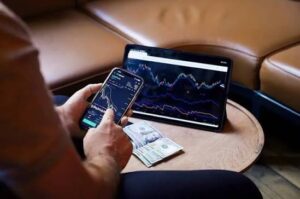
This article explores trading in detail, including how trading works, major types of trading, financial markets, trading strategies, psychology, risks, technology, common mistakes, and the future of trading in a digital economy.
What Is Trading?
Trading is the process of buying and selling assets in financial markets with the aim of making profit from price changes.
These assets may include:
- Stocks
- Cryptocurrencies
- Forex currencies
- Commodities
- Indices
- Bonds
- Futures
A trader buys an asset at one price and hopes to sell it later at a higher price. In some markets, traders can also profit when prices fall through short-selling or derivative trading.
Trading differs from long-term investing because traders usually focus more on shorter price movements rather than holding assets for many years.
Why Trading Has Become So Popular
Several reasons explain the rapid growth of trading worldwide.
1. Internet Access
People can now trade from smartphones or laptops anywhere.
2. Social Media Influence
Trading content is everywhere on platforms such as YouTube, TikTok, Telegram, and Twitter.
3. Cryptocurrency Growth
Crypto markets introduced millions of new people to trading.
4. Financial Freedom Goals
Many people hope trading can improve their income or lifestyle.
5. Low Entry Barriers
Some platforms allow trading with small amounts of money.
How Trading Works
Trading happens through markets where buyers and sellers exchange assets.
Example
A trader buys Bitcoin at $60,000.
If Bitcoin rises to $62,000 and the trader sells, profit is made.
If Bitcoin falls to $58,000 and the trader sells, a loss occurs.
The goal is to predict market direction more accurately than other participants.
Main Types of Financial Markets
1. Stock Market
The stock market allows people to buy shares of companies.
Examples:
- Technology companies
- Banking companies
- Manufacturing companies
When traders buy shares, they own part of the company.
Why People Trade Stocks
- Company growth opportunities
- Market volatility
- Dividend income in some cases
2. Forex Market
Forex stands for foreign exchange.
Traders buy one currency while selling another.
Examples:
- USD/EUR
- GBP/USD
- USD/JPY
The forex market is one of the largest financial markets in the world.
3. Cryptocurrency Market
Crypto trading involves digital currencies such as:
- Bitcoin
- Ethereum
- XRP
- Solana
- Dogecoin
Crypto markets operate 24/7 and are highly volatile.
4. Commodity Market
Commodities include physical goods such as:
- Gold
- Silver
- Oil
- Natural gas
- Wheat
Commodity prices are influenced by global supply and demand.
5. Index Trading
Indices track groups of companies or markets.
Examples include:
- S&P 500
- NASDAQ
- Dow Jones
Traders use indices to speculate on overall market movement.
Different Trading Styles
Not all traders operate the same way.
1. Day Trading
Day traders open and close positions within the same day.
Characteristics
- Fast-paced
- Requires constant monitoring
- High emotional pressure
2. Swing Trading
Swing traders hold positions for several days or weeks.
Focus
Capturing medium-term price movements.
3. Scalping
Scalpers aim for many very small profits within short periods.
Characteristics
- Very quick trades
- Requires precision and focus
4. Position Trading
Position traders hold trades for months or longer.
Focus
Long-term trends rather than short-term fluctuations.
Fundamental Analysis
Fundamental analysis studies the real-world factors affecting asset prices.
Examples include:
- Company earnings
- Economic reports
- Interest rates
- Government policies
- Adoption growth in crypto
A trader using fundamental analysis tries to understand the true value of an asset.
Technical Analysis
Technical analysis studies charts and price behavior.
Traders use:
- Candlestick patterns
- Support and resistance
- Trend lines
- Volume
- Indicators
The goal is to identify possible future market movements.
Common Trading Indicators
1. Moving Averages
Help identify market trends.
2. RSI (Relative Strength Index)
Measures whether an asset may be overbought or oversold.
3. MACD
Used to analyze momentum and trend direction.
4. Bollinger Bands
Measure price volatility.
5. Volume Indicators
Show market participation strength.
Risk Management in Trading
Risk management is one of the most important parts of trading success.
Even strong strategies fail without proper risk control.
Key Risk Management Principles
1. Never Risk Too Much on One Trade
Many traders risk only a small percentage per trade.
2. Use Stop Losses
A stop loss automatically closes trades to limit losses.
3. Avoid Emotional Revenge Trading
Trying to recover losses emotionally often creates larger losses.
4. Protect Capital
Without capital, trading opportunities disappear.
Trading Psychology
Psychology plays a huge role in trading performance.
Common Emotional Challenges
- Fear
- Greed
- Overconfidence
- Panic
- Impatience
Successful traders control emotions rather than letting emotions control decisions.
Importance of Discipline
Discipline separates professionals from gamblers.
Disciplined traders:
- Follow strategies
- Respect risk management
- Avoid impulsive decisions
- Maintain consistency
Leverage in Trading
Leverage allows traders to control larger positions with smaller capital.
Example
Using 10x leverage means a trader controls $1,000 with only $100.
Advantages
- Larger profit potential
Dangers
- Larger losses
- Liquidation risk
High leverage can destroy accounts quickly if used irresponsibly.
Trading vs Investing
Many people confuse trading and investing.
Trading
- Shorter-term focus
- Frequent buying and selling
- Focus on price movements
Investing
- Long-term focus
- Building wealth gradually
- Holding assets for years
Both approaches have advantages depending on goals and personality.
Common Trading Mistakes
1. Trading Without Education
Many beginners start with no knowledge.
2. Overleveraging
Using excessive leverage increases risk dramatically.
3. Emotional Decisions
Fear and greed damage consistency.
4. No Trading Plan
Random trading usually fails long-term.
5. Following Social Media Hype
Blindly copying others can be dangerous.
6. Ignoring Risk Management
One bad trade can destroy an account.
The Role of Technology in Trading
Technology transformed financial markets completely.
Online Trading Platforms
People can now trade instantly worldwide.
Mobile Apps
Trading from smartphones became common.
AI and Algorithms
Large institutions use automated trading systems.
Real-Time Data
News and charts are available instantly.
Cryptocurrency Trading and Its Impact
Crypto trading became one of the fastest-growing sectors.
Why Crypto Attracts Traders
- High volatility
- 24/7 market access
- Global accessibility
- Rapid price movement
Risks of Crypto Trading
- Extreme volatility
- Scams
- Regulatory uncertainty
- Security risks
Crypto markets can create both large profits and major losses quickly.
Importance of Patience in Trading
Many beginners want immediate success.
However, trading is a long-term learning process.
Patience helps traders:
- Wait for good setups
- Avoid emotional mistakes
- Build experience gradually
Demo Trading
Many platforms offer demo accounts.
Benefits
- Practice without real money
- Learn platforms
- Test strategies
- Build confidence
Beginners should practice before risking real capital.
Building a Trading Strategy
A trading strategy is a structured plan.
It should include:
- Entry conditions
- Exit conditions
- Risk limits
- Position sizing
- Market analysis method
Consistency matters more than random trades.
Trading and Financial Freedom
Some people use trading to:
- Build additional income
- Grow savings
- Create long-term wealth
- Increase financial independence
However, trading is not guaranteed income.
Professional traders understand losses are part of the process.
Can Trading Become a Full-Time Career?
Yes, but it requires:
- Skill
- Discipline
- Emotional control
- Capital
- Experience
- Patience
Most successful traders develop gradually over years.
Trading Communities and Social Media
Online communities help traders share:
- Analysis
- Strategies
- Market news
- Education
However, misinformation and fake success claims are also common online.
Scams in Trading
The popularity of trading attracted scammers.
Common scams include:
- Fake signal groups
- Guaranteed profit promises
- Ponzi schemes
- Fake brokers
- Unrealistic investment offers
If something sounds too good to be true, it usually is.
Trading and Economic News
Markets react strongly to news such as:
- Interest rate decisions
- Inflation reports
- Employment data
- Political events
- Global conflicts
Understanding economic events helps traders anticipate volatility.
The Importance of Continuous Learning
Financial markets constantly evolve.
Successful traders continue learning through:
- Books
- Market analysis
- Practice
- Experience
- Strategy testing
Education never stops in trading.
Healthy Trading Habits
Good habits improve long-term performance.
Useful Habits
- Keeping a trading journal
- Reviewing mistakes
- Taking breaks
- Maintaining emotional balance
- Managing sleep and health
Trading performance is connected to mental clarity.
Future of Trading
Trading continues changing rapidly.
Future trends may include:
- AI-assisted analysis
- Faster automation
- Blockchain-based markets
- More retail participation
- Improved mobile platforms
- Increased regulation
Technology will continue transforming how markets operate.
Final Thoughts
Trading offers opportunities, excitement, and financial potential, but it also involves serious risks. It is not a shortcut to guaranteed wealth. Success in trading comes from education, patience, discipline, strategy, and risk management.
Many beginners focus only on profits, but professional traders focus more on protecting capital and making consistent decisions.
Trading can become a valuable skill when approached responsibly and realistically.
Conclusion
Trading has become one of the most influential financial activities of the digital age. From stocks and forex to cryptocurrencies and commodities, financial markets provide opportunities for profit, growth, and learning.
However, successful trading requires much more than luck. It demands knowledge, emotional discipline, strategic planning, and continuous improvement.
People who treat trading seriously—as a skill rather than gambling—have a better chance of long-term success.
In the modern financial world, trading remains both an opportunity and a challenge, rewarding those who combine patience, preparation, and smart decision-making.